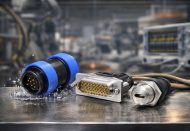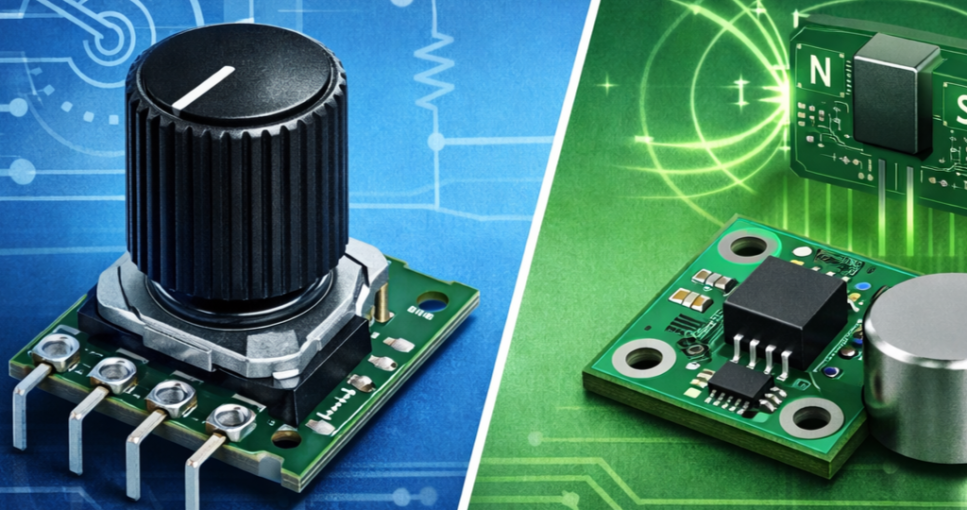
When designing a new system or upgrading an existing one, choosing the right control technology is crucial for optimal performance, longevity, and user experience. Two of the most common options for position sensing and control are Hall effect sensors and potentiometers. While both can achieve similar outcomes, their underlying principles, strengths, and weaknesses differ significantly. This blog post will delve into a technical comparison to help you determine which is best suited for your specific application.
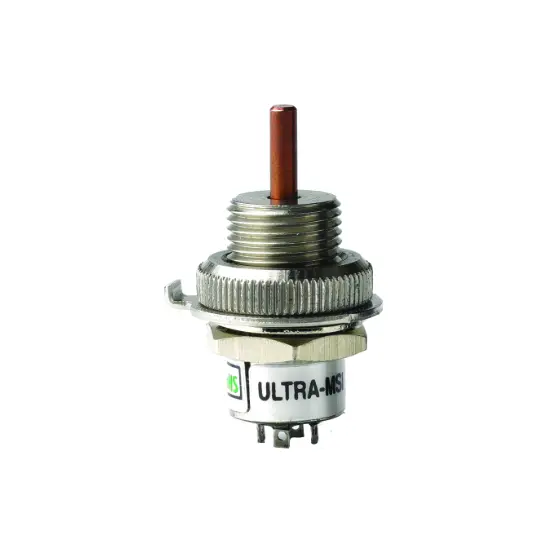
Potentiometers
Potentiometers have been a staple in electronics for decades, offering a simple and cost-effective method for variable resistance.
How they work:
A potentiometer consists of a resistive track and a wiper that moves along it. As the wiper’s position changes, the resistance between the wiper and one end of the track varies, thus changing the output voltage when a constant current is applied.
Advantages:
- Simplicity and Cost: Potentiometers are generally less complex to manufacture and therefore more affordable, especially for basic applications.
- Direct Analogue Output: They provide a direct analogue voltage output proportional to position, which can be easy to interface with many circuits.
- No External Power (for passive use): In some basic resistive divider applications, they don’t require external power beyond the signal itself.
Disadvantages:
- Wear and Tear: The mechanical contact between the wiper and the resistive track is prone to wear, leading to degradation in performance, increased noise, and ultimately, failure over time. This limits their lifespan, especially in applications with frequent movement.
- Environmental Sensitivity: Dust, moisture, and vibration can affect performance and accelerate wear.
- Limited Resolution and Accuracy: While good for many applications, the resolution can be limited by the physical construction and material consistency.
- Contact Bounce: The mechanical contact can sometimes lead to momentary signal instability.
Ideal Applications:
Potentiometers are well suited for applications where cost is a primary concern and movement is infrequent. Examples include volume controls, basic calibration adjustments, and infrequent user input.
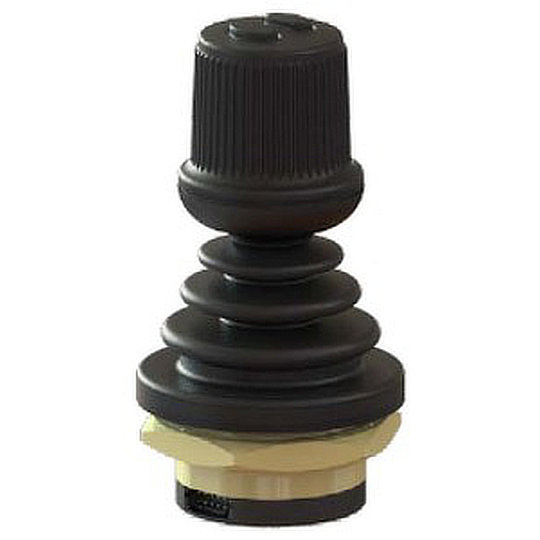
Hall Effect Sensors
Hall effect sensors operate on a fundamentally different principle, offering significant advantages in demanding environments and high-reliability applications.
How they work:
A Hall effect sensor measures the change in a magnetic field. When a current flows through a semiconductor material (the Hall element) and a magnetic field is applied perpendicular to the current flow, a voltage difference (the Hall voltage) is generated across the semiconductor. The strength of this voltage is directly proportional to the strength of the magnetic field. In control applications, a magnet is typically attached to the moving part (e.g., a joystick lever or a rotary shaft), and the Hall sensor remains stationary, detecting the magnet’s position.
Advantages:
- Non-Contact Sensing: This is the most significant advantage. Because there is no mechanical contact between the sensing element and the moving part, there is no wear and tear. This translates to:
- Virtually Unlimited Lifespan: Hall effect sensors can last for millions of cycles without degradation, making them ideal for high-use applications.
- Improved Reliability: Less prone to mechanical failure.
- Reduced Noise: No contact bounce or noise associated with physical wear.
- Environmental Robustness: Being sealed and non-contact, they are highly resistant to dust, dirt, moisture, vibration, and extreme temperatures, making them suitable for harsh industrial or outdoor environments.
- High Resolution and Accuracy: Hall effect sensors can offer very high precision and repeatability, providing smooth and accurate control.
- Solid-State Design: Their solid-state nature makes them durable and robust.
Disadvantages:
- Higher Cost: Generally, more expensive than potentiometers, especially for basic sensing.
- Requires External Power: Hall effect sensors are active devices and require a power supply to operate.
- Magnetic Interference: Can be susceptible to strong external magnetic fields if not properly shielded or designed.
Ideal Applications:
Hall effect sensors excel in applications requiring high reliability, long lifespan, precision, and operation in harsh environments. Perfect for industrial controls, automotive vehicles, medical equipment, and gaming where smooth, precise, and durable control is paramount.
Making the Final Choice
The decision between Hall effect and potentiometer controls ultimately comes down to your application’s specific environment and duty cycle.
If you are working on a cost-sensitive project where the control will be used indoors and infrequently, a potentiometer remains a highly effective and simple solution. However, for industrial applications, outdoor machinery, or any system where downtime is not an option, the Hall effect is the superior choice. Its non-contact nature eliminates the physical wear that plagues potentiometers, providing a “fit and forget” solution that maintains precision over millions of cycles.
By investing in Hall effect technology, you are choosing long-term reliability and reducing future maintenance costs, ensuring your equipment performs accurately, every time.
Ready to Upgrade Your Control Interface?
At Live Electronics, we stock a comprehensive range of high-performance control solutions tailored to your technical requirements. We stock a comprehensive range of high-performance Hall Effect joysticks for demanding environments, as well as versatile potentiometer joysticks.
Contact our technical sales team today to discuss your project requirements or to request a datasheet for our latest control components.