Understanding IDEC’s E-stop ‘Safe Break Action’ Feature: Enhancing Safety in Industrial Environments


In the fast-paced world of industrial automation, safety is paramount. With machinery and processes becoming increasingly complex, ensuring the well-being of workers and the reliability of equipment is a top priority for businesses. This is where IDEC’s Safe Break Action technology comes into play, offering a robust solution to enhance safety in industrial environments. 
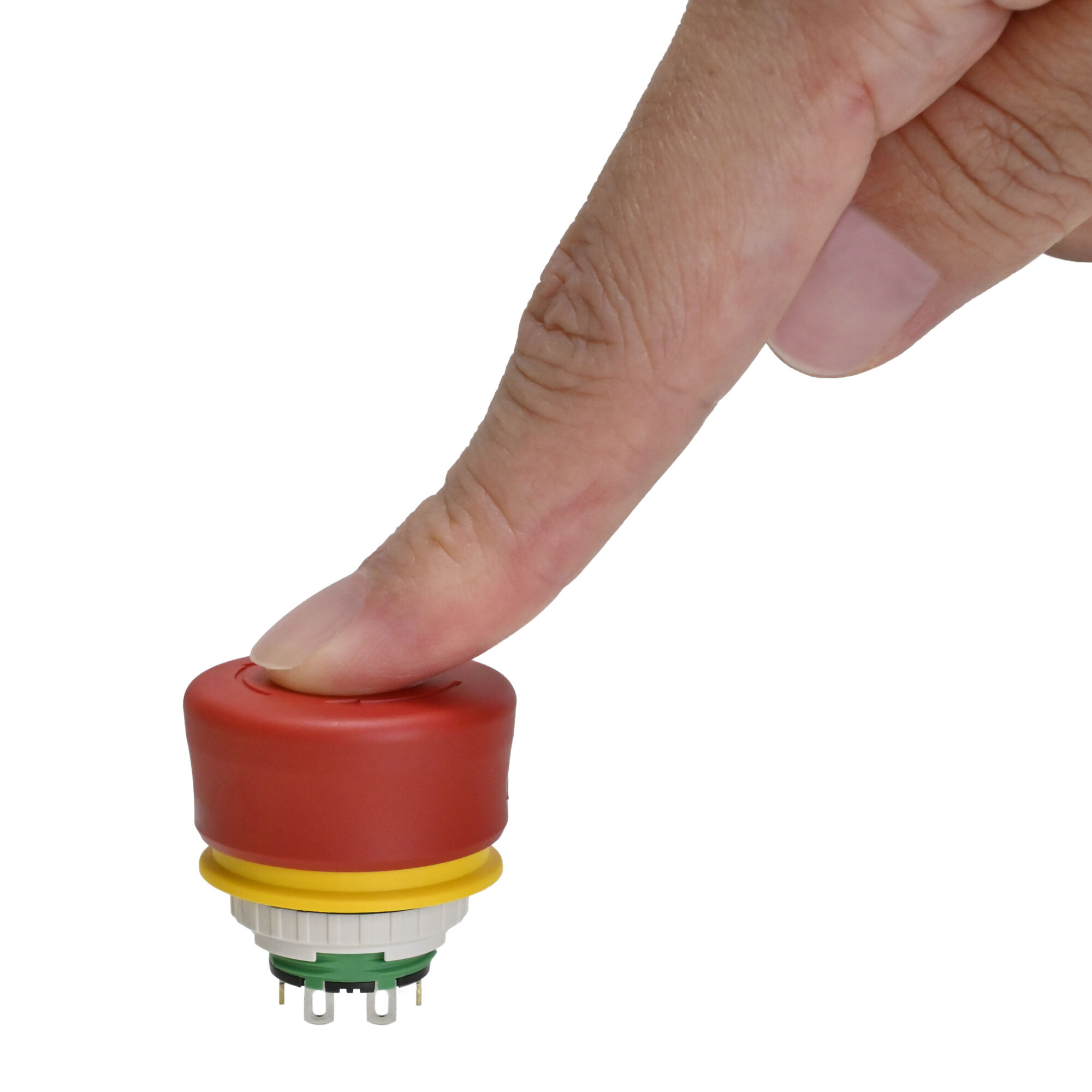
IDEC E-stop, Emergency Stop

What is an E-Stop? 

An emergency stop, or E-stop, is a safety mechanism designed to halt machinery or processes immediately in emergency situations. It’s a critical component of any industrial setup, allowing operators to swiftly intervene, turn off machinery fast, and prevent accidents or injuries. E-stops need to be easy to use, endure harsh factory conditions and deliver peace of mind.  

E-stops work by signalling a safety device, such as a safety relay, to cut the power to a machine or process.  Traditionally, the terminals within an E-stop are held in a closed position. This is referred to as a Normally Closed (NC) switch. On pressing the E-stop, the contacts disengage, stopping the flow of power and isolating the machine or circuit. Latches maintain the separation of the contacts until the operator resets the switch, typically through a pulling or twisting motion. However, one challenge with conventional E-stop systems is that they may not always provide fail-safe operation if the contact blocks within the switch are, for example, misaligned or incorrectly fitted. 

IDEC’s Solution: ‘Safe Break Action’ 

IDEC, a leading manufacturer of industrial automation and control solutions, addresses this challenge with its E-stop ‘Safe Break Action’ feature. This technology ensures fail-safe operation even in the rare event of contact block failure. 

IDEC’s E-stops are designed with a positive opening mechanism, also known as ‘Safe Break Action’. This means that the E-stop contacts have the spring pressure in the opposite direction meaning it will always fail in the safe position and cannot be defeated by welding or sticking contacts, thus ensuring reliable and consistent operation. 

These E-Stops are also available with 1 to 4NC contacts, depending on the series, and can include 1NO monitor contact to ensure no faults are missed. These additional contact options also mean that these E-stop switches can be used in Level 4 safety category applications. 

To conclude, IDEC’s E-stop ‘Safe Break Action’ feature represents a significant advancement in industrial safety technology. By combining fail-safe operation with ‘Safe Break Action’, IDEC provides a reliable and robust solution to enhance safety in industrial environments. As businesses strive to create safer workplaces and comply with regulatory standard, investing in advance safety technologies like IDEC’s E-stop switches in a proactive step towards achieving these goals.  
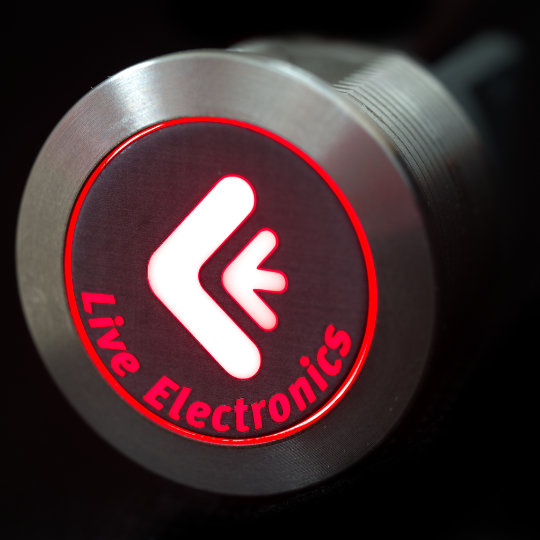
A quick guide to switch terminology

Back to Basics

A switch is an electromechanical device which is used to connect or disconnect an electrical circuit without the need to remove an item from the circuit, as you would with a connector. As there are so many types of switches available a basic understanding of switch terminology can help when choosing a switch.

If you are still unsure of the best switch for your needs please feel free to contact us.

Actuator The actuator is a mechanical device that the operator uses in order to activate the switch. This could be the cap of a pushbutton or a lever on a microswitch.
Actuation Force This is the force which is required to be placed on the actuator in order for the switch to be activated or deactivated.
Alternate/Maintained Action Switch This is a switch style where once the switch has been activated the switches actuator stays in that position until it is manually changed.
Base/Housing The housing is the main body of the switch, it is a protective cover for the electrical contacts within and provides insulation for the user as well as IP protection and robustness to the switch.
Break Before Make/BBM This is a style of double-throw switch where one circuit is opened before the second circuit is closed.
Switch capacity The switch capacity is the amount of current the switch can safely operate under.
Contacts The contacts are the current-carrying parts within the switch that complete the electronic circuit. These are also the parts that open and close when the switch is operated.
Detent A detent is a physical non-locking catch within the switch that indicates an activation point has been reached and can offer an audible click and/or tactile feedback to the user.
Dielectric Strength The dielectric strength is the switches ability to withstand arcing, if a higher current is applied then arching may occur resulting in degradation to the switch contacts.
Double-Throw This is a style of switch which makes one circuit while simultaneously breaking another circuit.
IP Rating The IP rating system is a universally recognised system for describing the ingress protection against physical objects and moisture. To learn more about this check out our guide here.
Electrical Life This is the expected life of the switch when it is used under normal conditions and under its stated switching capacity.
Lever Actuator A lever actuator is a hinged piece of metal that is used to press the actuator of the switch. This is useful when a switch is automatically activated and is predominantly found on microswitches.
Make Before Break/MBB This is a style of double-throw switch where one circuit is closed before the second circuit is opened.
Momentary Action Switch This is a switch style where the circuit is made or broken only when the switch is activated. Once force is removed from the actuator the switch returns to its normal state. For instance, a normally closed switch once pressed would break the circuit, once the switch is released the circuit would be closed again.
Normally Closed/NC This is when a switches contacts are closed therefore making the circuit when the switch is not activated.
Normally Open/NO This is when a switches contacts are open therefore breaking the circuit when the switch is not activated.
Over Travel This is the distance the actuator will continue to travel once the switch contacts have been closed or opened.
Pole A pole refers to a circuit, therefore a single-pole switch can operate one circuit, a double pole switch two separate circuits and an 8 pole switch 8 separate circuits.
Pre Travel This is the distance the actuator is required to travel before the contacts are closed or opened.
Reset Point This is the point when the switch returns its normal position. i.e. If a momentary and normally open switch is closed the point at which the circuit is reopened when the actuator is being decompressed is the reset point.
Throw This refers to the number of contact points within the switch. For instance, a single throw makes or breaks a single circuit whereas a double-throw makes one circuit whilst simultaneously breaking another circuit.
Snap Action This is where the contacts within the switch snap open or closed at high speed. This is independent of the speed with which the actuator is pressed, once the actuator gets to its activation point the contacts will spring open or closed rapidly. They will then return to normal just as fast once the actuator has reached its reset point.
Wiping Action This is the lateral movement of contacts within the switch, this is a design feature seen predominantly within microswitches and helps to clean the contacts of welding.


Common Abbreviations

SPST   Single Pole Single Throw

SPDT  Single Pole Double Throw

DPST  Double Pole Single Throw

DPDT  Double Pole Double Throw