How the Industrial Internet of Things (IIoT) Is Transforming Industry

As technology continues to advance at a rapid pace, one of the most transformative innovations reshaping traditional industries is the Industrial Internet of Things (IIoT). While IoT has become familiar in our homes through smart thermostats and wearable devices, IIoT extends this connected intelligence to the industrial sector, where the challenges are greater, and the rewards even more significant.

What is IIoT?

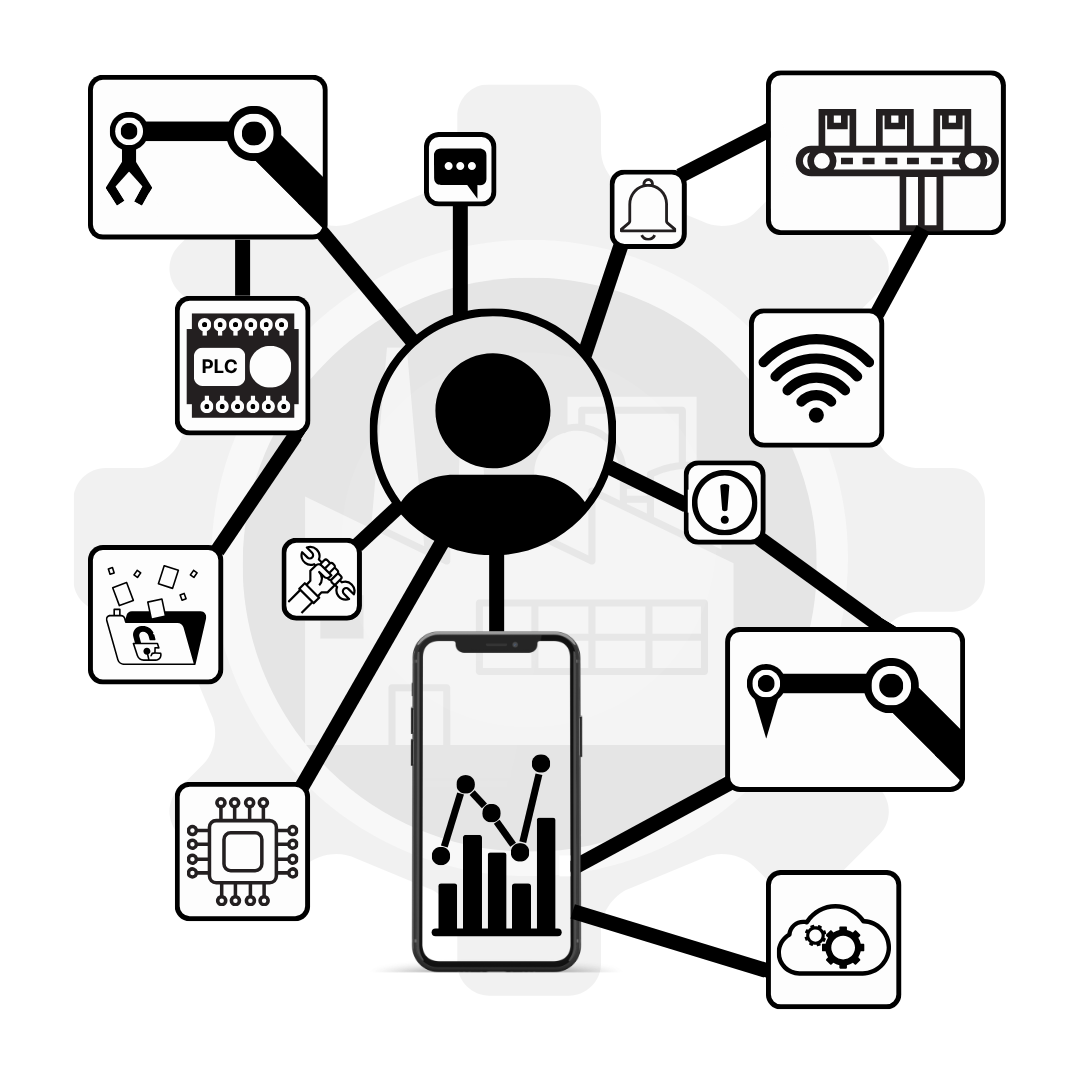
The Industrial Internet of Things refers to the network of interconnected devices, sensors, and systems used in industrial settings like manufacturing, energy, agriculture, logistics, and utilities. These devices collect and exchange data, enabling smarter decision-making, automation, and predictive insights.

IIoT has played a central role in powering Industry 4.0, the fourth industrial revolution, defined by smart, connected manufacturing systems that are highly efficient and responsive.

Key Components of IIoT in Manufacturing

Implementing IIoT in manufacturing relies on a few essential building blocks that enable smarter, more connected operations:

  1. Smart Sensors

In manufacturing, smart sensors are embedded in machinery, conveyors, robotic arms. These collect real-time data from machines and the environment to help monitor performance, detect issues, and ensure product quality.

  1. Edge Devices

Edge devices, such as PLCs, process data directly on the factory floor, enabling real-time responses, predictive maintenance, and faster decision-making without relying on.

  1. Connectivity

Manufacturing environments require reliable and fast connectivity to enable communication between machines and systems, ensuring a seamless data flow and coordination across the factory. These include Ethernet, Wi-Fi and Modbus.

  1. Cloud and Analytics

Cloud platforms help manufacturers gain insights from operational data by enabling monitoring and performance tracking, acting as a central hub that connects systems and supports smarter, data-driven decisions.

  1. Cybersecurity

Given the critical nature of industrial systems, robust security frameworks are essential to prevent disruptions and data breaches.

The Future of IIoT

As IIoT continues to evolve, it will continue to shape the future of industrial strategy, driving new levels of productivity, agility, and cost-efficiency. Advancements in AI, machine learning, and 5G connectivity will unlock even greater capabilities. Smart factories will become more autonomous, adaptable, and efficient, able to respond in real time to changing market demands.

How IoT is Changing Consumer Electronics

The Internet of Things (IoT) has become a transformative force in the consumer electronics industry, redefining the way businesses operate and interact with technology. This revolution is particularly evident in how companies optimise processes, enhance efficiency, and create smarter, more adaptive systems. At the core of this transformation are Programmable Logic Controllers (PLCs), which provide the intelligence and control necessary for seamless automation and data-driven decision-making. Here’s a deeper dive into how IoT, powered by PLCs, is reshaping the consumer electronics landscape.

Seamless Connectivity

IoT-driven PLCs are enabling a level of integration and connectivity that was previously unattainable. By connecting devices and systems across an operation, these controllers streamline processes and improve overall performance. For example, in modern manufacturing, connected assembly lines equipped with IoT-enabled PLCs can monitor performance metrics, detect potential issues, and self-adjust in real time. To make these advancements even more powerful, these metrics can be linked to an app or website. With the integration of real-time data from PLCs and IoT devices, users can access performance insights, track key metrics, and receive alerts from anywhere in the world. This reduces downtime, improves product quality, and boosts operational efficiency. Beyond manufacturing, smart home devices like thermostats, security systems, and entertainment systems rely on IoT connectivity to deliver a unified user experience.

Operational Efficiency

One of the most significant benefits of IoT and PLC integration is the real-time data they provide. This data enables businesses to optimize processes, reduce waste, and improve efficiency. Manufacturers, for instance, can leverage predictive analytics powered by IoT to identify wear and tear on machinery before it leads to costly breakdowns. Additionally, PLCs ensure precise control of machines, maintaining consistent product quality while minimising resource usage. This is particularly critical in a competitive industry where margins are tight and consumer expectations for high-quality products are unwavering.

Enhanced User Experience

IoT’s impact isn’t limited to back-end operations; it also transforms the end-user experience. Smart consumer electronics, such as voice-activated assistants, wearable fitness trackers, and advanced kitchen appliances, use IoT to deliver tailored, intuitive interactions. These devices adapt to user preferences, learn from behaviour, and integrate with other smart systems to create a cohesive ecosystem. PLCs can play a vital role in ensuring that these devices operate reliably and efficiently, handling complex tasks in real time to meet user expectations.

Scalability and Flexibility

In today’s fast evolving markets, scalability and adaptability are critical for staying competitive. IoT enabled PLCs empower businesses to scale operations or adapt to new demands without overhauling their existing infrastructure. For instance, as consumer preferences shift or new technologies emerge, manufacturers can reprogram PLCs to accommodate these changes. This agility not only reduces downtime during transitions but also positions companies to capitalise on emerging trends quickly.

Driving Innovation

IoT has opened the door to unprecedented levels of innovation in consumer electronics. By integrating PLCs with IoT, businesses can experiment with advanced capabilities like remote diagnostics, machine learning, and even augmented reality. These technologies have the potential to revolutionize how devices are built and used. For example, remote diagnostics powered by IoT allow companies to troubleshoot and update devices without requiring physical access, ensuring minimal disruption for consumers.

Conclusion

IoT enabled PLCs are driving smarter, more efficient operations in the consumer electronics industry, paving the way for ground-breaking advancements and seamless integration. By embracing these technologies, businesses can optimise processes, reduce costs, and deliver exceptional user experiences. As technologies like artificial intelligence, 5G, and edge computing continue to mature, the potential for IoT will only grow. Companies that stay ahead of the curve by leveraging these advancements will not only thrive but also set the standard for the future of the industry.

Compact & Powerful Automation Solution: IDEC’s FT2J 7-inch PLC+HMI Now Available from Live Electronics!

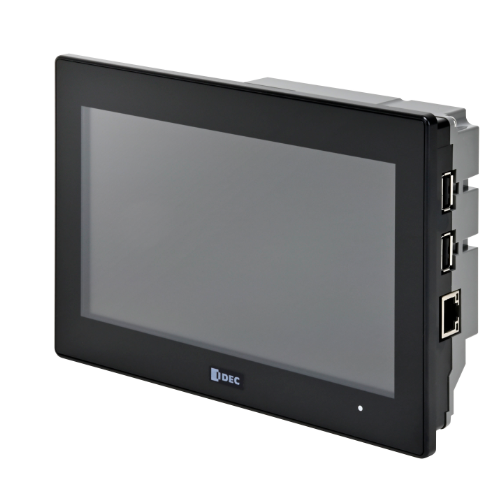
A new all-in-one PLC and HMI system from Live Electronics looks set to make it easier, faster and more cost-effective for industrial OEMs to design, install and maintain automation and robotic equipment. Manufactured by IDEC, a leading industrial component company, the new FT2J system is powerful, adaptable and simple to use and install. 

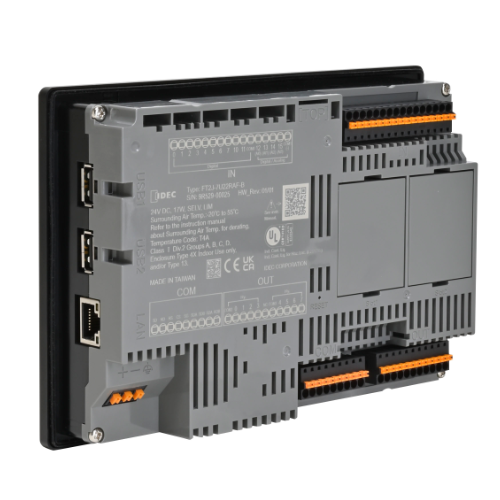
The standout feature of the IDEC FT2J is its space-saving design. By integrating the functionalities of a PLC and an HMI into one unit, the FT2J significantly reduces the complexity and space requirements traditionally associated with separate devices. This makes it an ideal choice for applications where space is limited but performance and functionality cannot be compromised. 

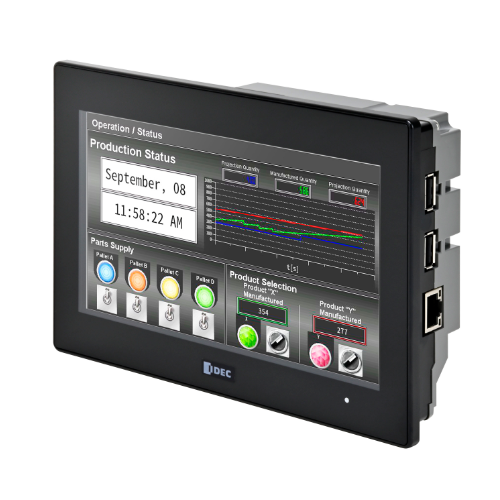
The FT2J is designed with a user-friendly interface that features a 7-inch high-resolution display with projected capacitive touch technology. The colour display boasts an 800 x 480 pixel resolution, providing clear and detailed visuals that make it easy for operators to monitor and control their systems. This ensures that even in demanding environments, users can interact with their systems with ease and accuracy. 

Ruggedness and reliability are key attributes of the FT2J. It is built to endure harsh industrial conditions, featuring IP66-rated protection that safeguards against dust, water, and extreme temperatures. This robust construction ensures the FT2J can maintain high performance and reliability even in the most challenging environments, making it a dependable choice for industries that demand durability. 

In addition to its robust design, the FT2J offers flexible connectivity options, including Ethernet, USB, and serial ports. This allows for seamless communication with other industrial devices and systems, facilitating efficient data exchange and integration.