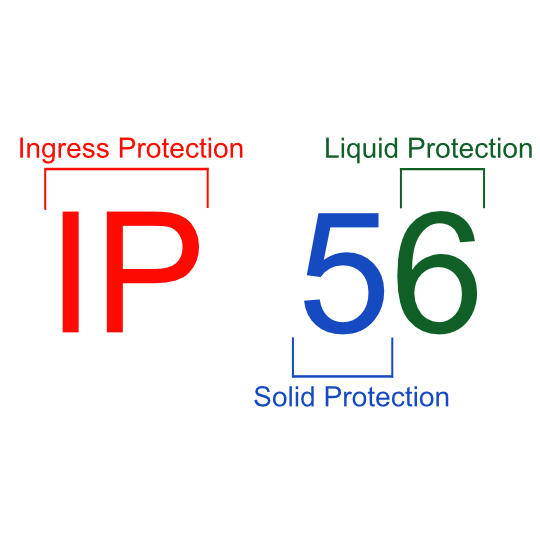
A quick guide to IP ratings

The IP rating or IP code refers to the Ingress Protection rating also sometimes called the international Protection rating. This is a system that was set up to give a standardised and easily readable interpretation of a product’s protection against solid objects and moisture. The International Electrotechnical Commission (IEC) and equivalent European Standards (EN) code for IP ratings are IEC 60529 and EN 60529 respectively.

The IP rating is made up of two numbers. The first refers to the amount of protection against a solid object such as a person’s finger, a tool or dust. The second number refers to the protection against moisture such as rain, pressurised water or the complete submersion of a product. Some ratings will show an X such as IP2X, in these instances the X can be changed to a 0 or simple no protection is given.

There are also, in some circumstances, additional letters after the double number code. These represent additional protections or explain how the testing was conducted. The most likely letter seen would be K which follows the code IP69. This IP69K code is a newer rating that was designed for products which can withstand high-pressure and high-temperature water ingress. This makes them ideal for steam cleaning and is seen on products which undergo regular cleaning at these high levels.

Below is a list of the different levels of protection which make up the IP rating system.


The first number – Solid object protection

0 or X – No protection given

1 – Protection against objects larger than 50mm such as the back of an average adult hand

2 – Protection against objects larger than 12.5mm such as an average adult finger

3 – Protection against objects larger than 2.5mm such as tools

4 – Protection against objects larger than 1mm such as wires, screws or insects

5 – Partial protection against dust, some dust may enter but not enough to cause the product to fail

6 – Protection against dust within a vacuum for up to 8 hours


The second number – Moisture protection

0 or X – No protection given

1 – Protection against vertically dripping water

2 – Protection against dripping water at a 15° angle

3 – Protection against spraying water at an angle up to 60° from vertical

4 – Protection against splashing water from any direction

5 – Protection against water jets from a nozzle of 6.3mm from any direction at 30kPa

6 – Protection against powerful water jets from a nozzle of 6.3mm from any direction at 100kPa

6K – Protection against powerful water jets from a nozzle of 6.3mm from any direction at 1,000kPa

7 – Protection against immersion in water up to 1m for 30 minutes

8 – This number varies depending on the manufacturer but usually relates to protection against immersion in water at depths of over 1m for over 30 minutes or at 1m for up to 24 hours.

9K – Protection against powerful and high-temperature water jets at 80°C and under the pressure of 8-10MPa.


Additional Letters

A – Protection against the back of an average adults hand

B – Protection against an average adults finger

C – Protection against access with a tool

D – Protection against access with a wire

F – Oil Resistant

H – High voltage device

M – Device was moving during the water test

S – Device was stationary during the water test

W – Protection against weather conditions i.e. rain and humidity


It is important to remember that IP ratings are designed to give designers and purchasers a quick way to identify if a product will meet their requirements and does not mean one is better than another. For instance, a product intended for general outdoor use does not need to have an IP67, IP68 or IP69K rating which will also cost much more to purchase. For many outdoor applications, an IP65 or IP66 rating would be more than enough protection against wind and rain.

Remember the IP rating system is designed to standardise and relay information and the higher the number is not necessarily always the better option.
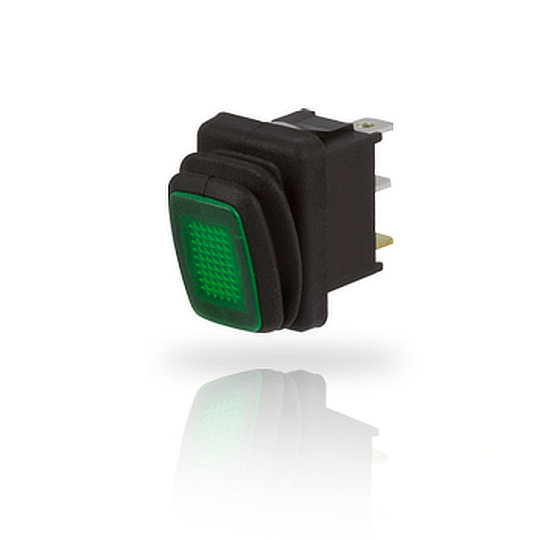
The Sealed Rocker Switch: Why Re-invent the Wheel?

Rocker switches may be old school but the fact remains, They Work! They are used extensively in everything from domestic appliances, industrial control systems, off-highway vehicles and medical equipment to name but a few.

Our range of sealed rocker switches are robustly designed to withstand harsh environments and are sealed from IP56 up to IP65 rating.

Manufacturer legends are available or for a more personal touch, we can custom etch almost any design onto both illuminated and non-illuminated switches.

See our range of sealed rocker switches here or contact us to discuss your requirements.

Live Electronic’s Pushbuttons

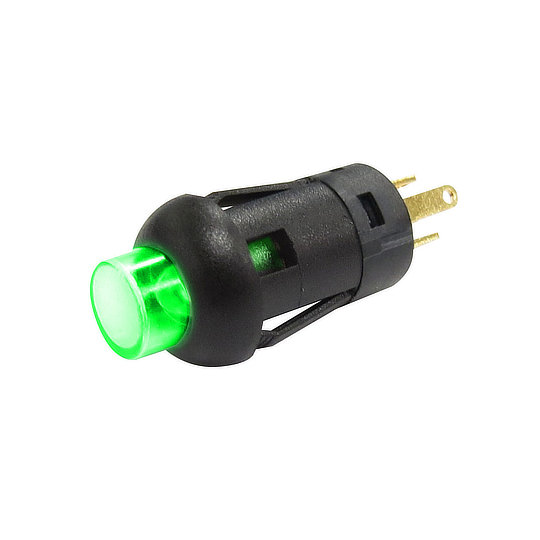
Pushbutton switches are found everywhere! This is in part due to their ease of use but also due to the multitude of different styles and specifications that are on offer.

We work with quality manufacturers such as Dailywell, IDEC and ZF to offer thousands of variations for our customers. These range from sub-miniature and PCB mount switches through to fully sealed IP68 panel mount options and specialist switches.

Today, as much thought must be given to aesthetics as to build quality and functionality.

Therefore, we supply pushbuttons in many styles and shapes, alongside features such as waterproof, vandal-resistant and hall effect. These can be illuminated or non-illuminated, plastic, metal or with ceramic faces.

We can even laser etch nearly any image into most actuators to give you a fully customised product.

View our range of pushbuttons here or contact us to discuss your requirements.

Working from home? More spare time? Working on something new?

In these unusual circumstances we know some people are working flat out to keep their businesses running smoothly, we also understand some people have more spare time on their hands. I have recently had a few conversations with customers who are now working from home and are not as busy as they generally would be. This has freed up enough time for some of them to continue working on R&D projects which were not at the top of their to-do lists.

Live Electronics is currently using this time to complete many of the small tasks that build up in the “leave until later” pile I’m sure we all have.

If this sounds like you and you are now working on new projects feel free to give us a call or send an email to discuss ways in which Live Electronics may be able to help you. We are always more than happy to spend time helping customers and potential customers alike find products which will best meet their requirements.

So if you have any needs, have questions about products, require a sample or just want to chat about business please feel free to give us a call.

Best wishes from everyone at Live Electronics

P.S. We are currently doing our utmost to ensure lead times are not pushed out too far. We are in constant communication with our suppliers and partner companies to bring you the best service possible during these challenging times.

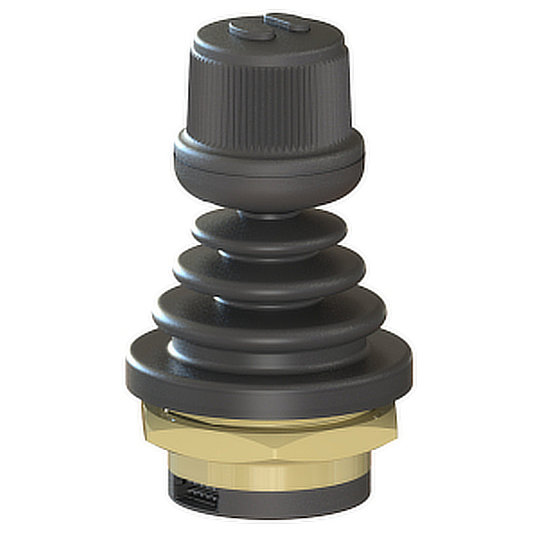
Ruffy Controls’ HE1 Series Hall Effect Joysticks

Ruffy Controls’ HE1 series of Hall Effect joysticks are an ideal alternative to products such as APEM’s HF or 3000 series’. Ruffy’s proprietary Hall Effect sensor software enables them to avoid a “dead band” at the corners of travel and provides a return-to-centre value of only ± 0.05V.

The HE1 offers a threaded housing option requiring no above panel hardware and a choice of 21 actuator styles including integrated buttons and Z-axis control versions. These joysticks also come with a HID-compliant USB cable for quick set up. Alternatively, it can be terminated with a Hirose connector offering the same pinout as APEM’s HF series, making the HE1 a perfect drop-in replacement. The HE1 is ideal for CCTV systems and remotely operated equipment.

Find out more here or contact us today.

Sensing Movement Everyday

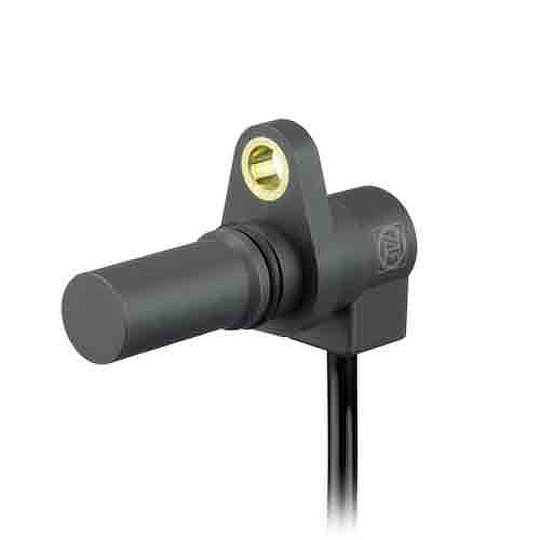
We are proud to offer ZF’s range of precision angle position, linear and speed & directional sensors. These sensors use Hall Effect technology which reduces wear and tear on the sensor giving exceptional life expectancy whilst still offering accurate position detection.

The range of ZF sensors can be specifically calibrated to offer the most precise output possible. This includes variables for measuring range, slope and PWM output. The linear sensors are easy to set up and offer dual independent outputs for redundancy and high reliability, while the angle position sensors are able to monitor rotation up to 360°. Both types can be sealed to IP68, making them ideal for applications such as hydraulic controls, electrical drives, gear selection/shifting position and many more.

The speed & directional sensors have been designed in a modular format allowing for easy pre-selection of criteria including housing length, shaft length, shaft diameter, 2,3 or 4 wire terminations and open-collector, PMW or current signal outputs. These sensors are also available in IP69 for the harshest of environmental conditions and are perfect for electric drives, automation systems and wind turbines.

Find out more about ZF sensors here, or contact us for more information.

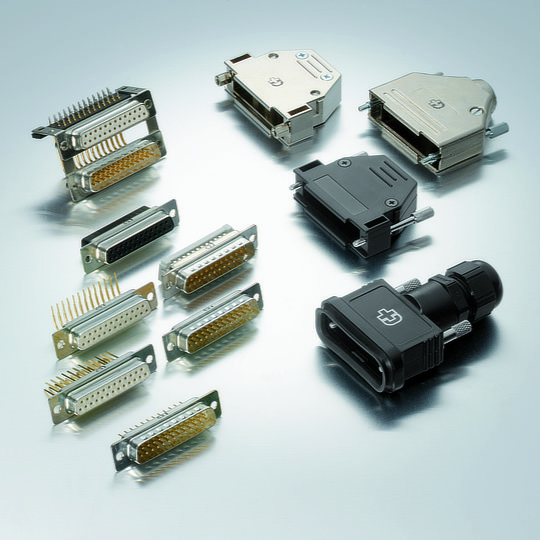
We are excited to announce that we are now an authorised supplier of Deltron AG connectors

Following our aim of delivering our customers some of the best products on the market, we are excited to announce we can now supply Deltron AG’s range of extremely high quality and robust Swiss-made D-Sub connectors.

Available in the basic standard and high-density variations Deltron AG also create specialised filtered, dual-port, hybrid (signal & power), waterproof and SMT D-Sub’s. They also pride themselves on the ability to customise products for nearly any application.

Deltron D-Subs are found in many high-end markets including Aviation, Medical, Rail, Telecoms, and Data transmission to name a few.

Deltron AG’s range can be viewed here or contact us today for information on specific products or customisations.

Live Electronics can now supply Elma Rotary Switches and Encoders

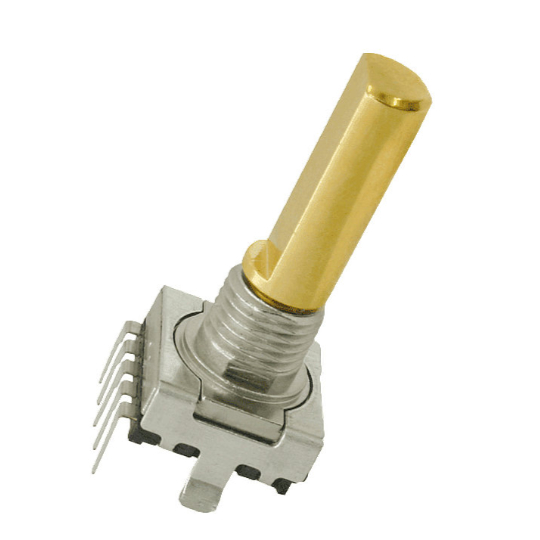
We are extremely happy to now be able to offer our customers high-end industrial and military-grade rotary selector switches, coded switches and incremental encoders from Swiss manufacturer Elma.

Established in 1960 Elma has since become a technology leader known for their precision rotary and coded switches alongside their military and aviation technology departments. Their rotary switches and encoders can now be found across the globe in markets such as Defence, Aerospace, Medical, Telecommunications, Industrial, Broadcast, Transportation, and handheld Radio.

Elma pride themselves on not only offering fantastic products but also being able to customise them where necessary. Whether this be modify switching schemes, bushings, shafts or an entirely new control knob.

View Elma’s range here or contact us for more information.

The New 14mm RGB LED Indicator from Sloan 

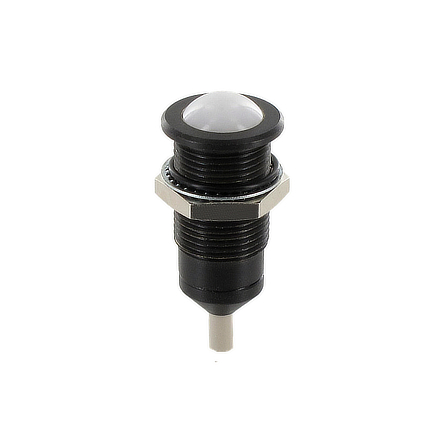
The new 979 series of indicators from Sloan are designed to fit 14mm diameter cutouts and are offered in a blackened brass or nickel-plated case with flat or domed style lenses.

Available with red/green (RG) or red/green/blue (RGB) LEDs in 5V, 12V, 24V and 28V variations and sealed up to IP68 the 979 series is extremely versatile making it perfect for medical appliances, telecoms, control panels and military applications.

To find out more click here.

The Joystick – A feeling of exhilaration or named after James Henry Joyce?

Nowadays if you ask someone to describe a joystick you will be given a multiple of answers ranging from full-size aircraft joystick, CCTV controllers or a thumb style gaming joysticks. For a device that is so well known not many people know much about the history of the joystick, and up until this article I was among this crowd.

Whilst here at Live Electronics we understand the modern technology around joysticks and represent some of the best manufacturers in the world we thought it would be a good idea to investigate the history of these now tiny and precise human interface devices.

Amazingly there is no confirmed origin for the word joystick! According to Engadget.com [1] “Some researchers feel its origins are the result of “the exhilaration felt by an early pilot’s journey into the air,” (a stick that makes you happy) while others believe it is named for a Missouri pilot and inventor, James Henry Joyce (the Joyce stick)”. Thankfully the history surrounding joysticks is a bit more solid.

As we know, a joystick is a device which pivots on a base and then relays this direction to a control device which carries out a particular function at that point. The first confirmed use of such a device was in 1908 by the French aviation pioneer Louis Bleriot in his Bleriot VIII experimental aircraft. The device used by Louis Bleriot was purely mechanical and we need to jump forward to 1926 when the first electronic joystick was created.

Patented by the US inventor C. B. Mirick whilst working for the United States Naval Research Laboratory this device was a 2-axis electronic joystick believed to be designed for operating unmanned aerial vehicles (UAV’s), Mirick even states “My control system is particularly applicable in manoeuvring aircraft without a pilot.”[2]

The next step forward was in 1944 by German scientists to control their Henschel Hs 293 glide bombs and unpowered Fritz-X missiles. Whilst still utilising a 2-axis design the new device used electrical on-off signals rather than potentiometers to be used more easily as part of a radio control transmitter system. This allowed certain bomber aircraft to accurately guide both rocket-propelled and unpowered guided missiles onto their targets.

Joystick technology continued to develop slowly throughout the 50’s, 60’s and 70’s and was used in NASA’s Apollo programme, most notably in the Apollo lunar lander test models. However, this was about to change and in the early 1980’s home gaming machines were increasing, the first joystick-controlled gaming controller was for the Atari 5200 in 1982.

The idea of using joysticks for gaming began to gain traction with the first thumb style joystick been used in 1988 with the release of the NES MAX. The NES MAX showed how useable and intuitive joysticks could be in gaming, but it wasn’t until the release of Sony’s PlayStation Analog joystick in 1996 that the gaming joystick really took off due to its ability to work so well within a 3D world.

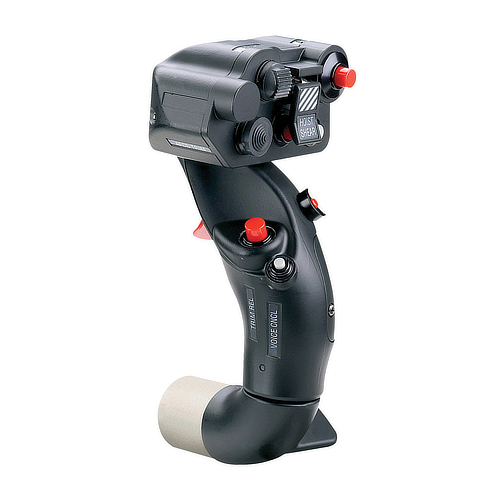
Outside of gaming, the joystick found its home not only in aviation applications but also in controlling machines such as UAV’s and sub-sea remotely operated vehicles (ROV’s), construction equipment, off-road vehicles, surveillance cameras, wheelchairs and multiple military applications.

Miniature joysticks have come a long way since the Mirick’s 1926 design with companies such as Ultra MSI, OTTO Controls and Ruffy Controls creating potentiometer and Hall Effect style joysticks which are smaller and lighter with better environmental protection and more precise than ever before. Due to their familiar and instinctive nature, combined with exceptional precision, joysticks are being designed into more and more high-end products such as human controlled robotics and medical equipment.

After years of gaming and now seeing how design engineers are incorporating joysticks into their amazing new products, the future looks very bright for their use as a human interface device and given the choice I would definitely choose the first potential origin of the word Joystick as giving a feeling of exhilaration.

See our range of joysticks here.

Could USB Type-C be all you need?

Sometimes it’s good to have a look back at just how far technology has brought us as well as looking forward to the possibilities of tomorrow. I have just read a great article on RS Design Spark by Connector Geek on the USB Type-C connector and its advantages over older models. This has me thinking about possibilities for the USB Type-C especially within new projects we are working on with our customers, I hope you will also find this post interesting.

“The connector industry is very mature. People have been making connectors long before semiconductors came onto the scene, and connectors have been part of every major development in the electronics industry. Unlike the younger technologies, it is rare that anything truly groundbreaking happens in the world of connectors.”

To read the rest of the blog post click here.

For more information on our USB-C range please contact us here.

The next step in human-machine interface is here….

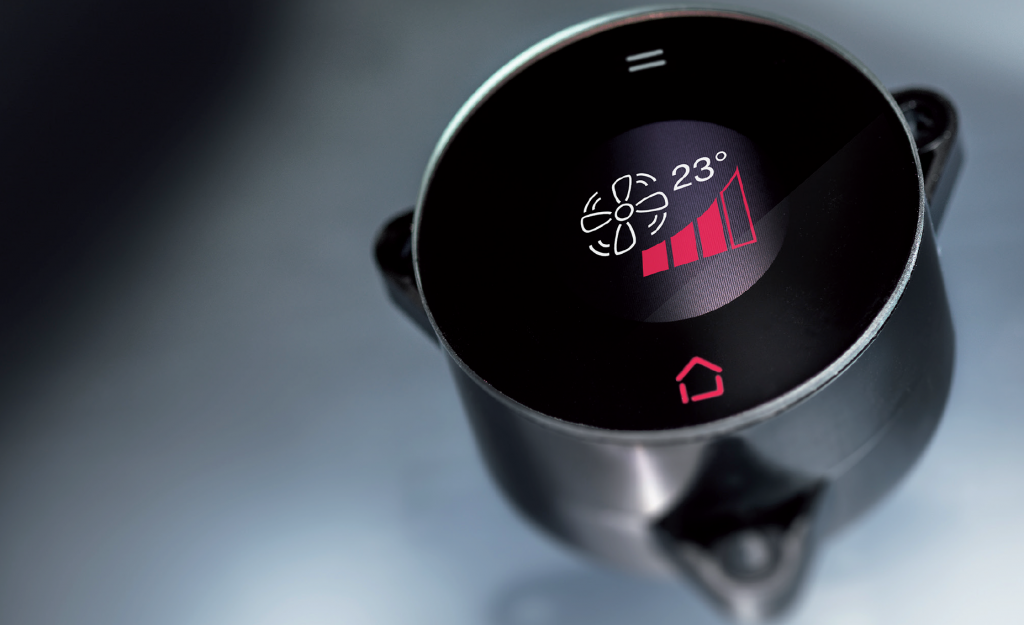
The Schurter CDS1 represents the most intuitive way to interface with your products.

A freely configurable OLED capacitive touch display allows multiple operations by touch. Comprising of four soft keys and one-touch button the Schurter CDS1 allows you to view, stroke, swipe, rotate or use long and short soft key touch to fully interact with your product.

The plug and play design allows for easy setup and a fast design-in process. With the ability to upload custom PNG and GIF files, displayed on the 65,000 colour OLED display at 25PPS (Pictures Per Second), users can see exactly what you want them to. With operating temperatures ranging from -20⁰c to 60⁰c, this standardised interface offers the perfect solution for your designs.

Contact us today for more information.